Go to www.radtechbootcamp.com today to view the entire X-Ray Direct exposure Aspect video series and more!
kVp is in fact an acronym that represents:
Kilovoltage peak
This is the optimum (or Peak) electron energy as they stream through the x-ray tube.
Here’s what happening:
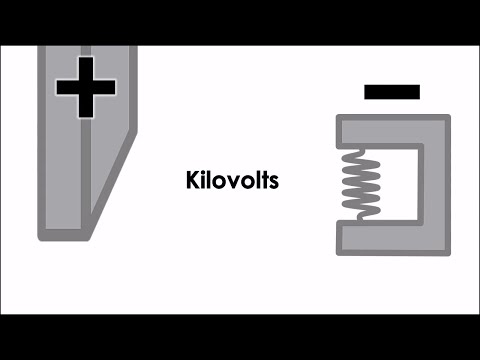
Throughout an x-ray exposure, the cathode is adversely charged and the anode is positively charged. This difference in charge is called the kilovoltage of the “tube potential”.
Increasing the kVp produces a bigger voltage difference across the tube. This triggers the electrons to move faster, which gives them more energy.
Decreasing the kVp produces a smaller sized voltage difference throughout the tube. This causes the electrons to move more gradually, which provides less energy.
Why does this matter?
Modifications in kVp have really essential effects on the x-ray beam. (Big arrows).
Increasing the kVp increases the beam intensity (like increasing mAs), however …
Increasing the kVp likewise increases the beam energy.
In other words, kVp affects both the beam amount (intensity/number of photons) and the beam quality (energy).
KVp is special for this factor: it is the only prime exposure variable that can change the energy of the x-ray beam. No other variable does this …
Not the mA.
Not the exposure time.
Not the distance.
The only kVp manages the energy of the x-ray beam.
The mathematical relationship in between kVp and beam energy is extremely simple.
The kVp is mathematically equal to the optimum beam energy.
For example: If the kVp is set to 100, the optimum energy photons in the beam will be 100 keV. Not all photons in the beam will be 100 keV, however some while.
KeV represents kilo electron volt, which is how we determine the energy of photons.
The mathematical relationship in between kVp and beam strength (amount) is a little more intricate. It looks like this:.
I_1/ I_2 = (kVp _ 1 ^ 2)/( kVp _ 2 ^ 2 ).
Just know that altering the kVp does have a big impact on the beam strength.
KVp affects other elements of the direct exposure too.
Increasing the kVp increases the patient dosage. This is because increasing the kVp produces more x-ray photons, which implies more photons are striking the client.
The reverse is likewise real:.
Reducing kVp decreases the client dosage.
KVp likewise affects receptor exposure in a similar method.
Increasing the kVp increases receptor direct exposure. This is an effect of the increased beam intensity and since of the increased energy results in more penetration through the client.
The opposite is also real:.
Reducing the kVp reduces receptor direct exposure. Less photons are developed and fewer penetrate through the patient.
The relationship in between kVp and receptor exposure id specified by the 15% guideline …
Increasing kVp by 15% will double receptor direct exposure.
Decreasing the kVp by 15% will reduce receptor direct exposure by half.
kVp also affects the image contrast. The factors for this are talked about in other lessons, but understand …
Increasing the kVp decreases the image contrast.
Decreasing the kVp increases image contrast.
In summary:.
Increasing the kVp increases the beam energy and the beam strength.
Increasing kVp likewise increases the client dosage and receptor but decreases the image contrast.

No comments:
Post a Comment